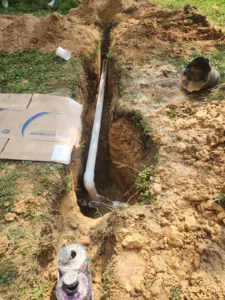
When a plumber tells you the problem is underground, the next thought is usually about the yard. Will the lawn be torn up? What about the flower beds, the mature trees, the driveway? These are fair questions. Underground plumbing work, whether it’s a sewer line, a water service line, or a new connection for a custom home, does require digging.
The good news is that a well-planned excavation is more controlled than most homeowners expect. At Cordova’s Plumbing LLC, we’ve completed underground plumbing work for homeowners and builders throughout Richmond, VA and the surrounding area for over 10 years. Here is what the process looks like and how your landscaping is protected along the way.
Why Underground Plumbing Work Requires Excavation
Most of your home’s critical plumbing connections are buried, and the only way to reach them is to open the ground.
- Sewer lines carry waste from your home to the municipal sewer connection and must be buried at a consistent downward slope
- Water service lines bring fresh water from the meter to your home and are buried below the frost line to protect them from freezing
- Gas lines serving outdoor appliances, generators, or detached structures run underground between the meter and the connection point
- Drainage lines for downspouts, yard drains, or sump pump discharge are routed below the surface so they stay out of the way
When one of these lines fails, shifts, or needs to be installed for the first time, excavation is often the most reliable way to do the job correctly. In some cases, trenchless methods can reduce digging, and a licensed plumber can tell you whether that is an option for your property.
Before the First Shovel: Planning and Safety Steps
A careful excavation starts well before any digging begins.
- Calling 811 first. Virginia law requires that underground utilities be marked before excavation begins. Utility companies mark the location of gas, electric, water, and communication lines so crews don’t strike them
- Walking the property with you. We review the proposed route, point out where the trench will run, and discuss anything you want protected, such as a favorite tree, a garden bed, or an irrigation system
- Identifying your own underground items. Irrigation lines, invisible pet fences, landscape lighting wires, and old septic or drain lines often aren’t on any utility map, so tell your plumber about them
- Pulling permits. Underground plumbing work typically requires permits and inspections through the local building authority, and your plumber should handle this
- Choosing the shortest, least disruptive route. Whenever the design and code allow, the line is planned to avoid trees, patios, and other features that are expensive to disturb
Good planning is the single biggest factor in how much of your yard is affected.
How Your Landscaping Is Protected During Excavation
A professional crew treats your yard as part of the job, not as an afterthought. Here are the steps that make the difference.
- Setting aside the sod. Where possible, grass is cut and lifted in sections and kept moist, so it can be replaced rather than leaving bare soil
- Separating topsoil from subsoil. Topsoil is stockpiled apart from the deeper clay so the healthiest soil goes back on top when the trench is closed
- Using tarps and plywood. Soil piles are placed on tarps, and boards can protect lawns, walkways, or driveways from equipment and foot traffic
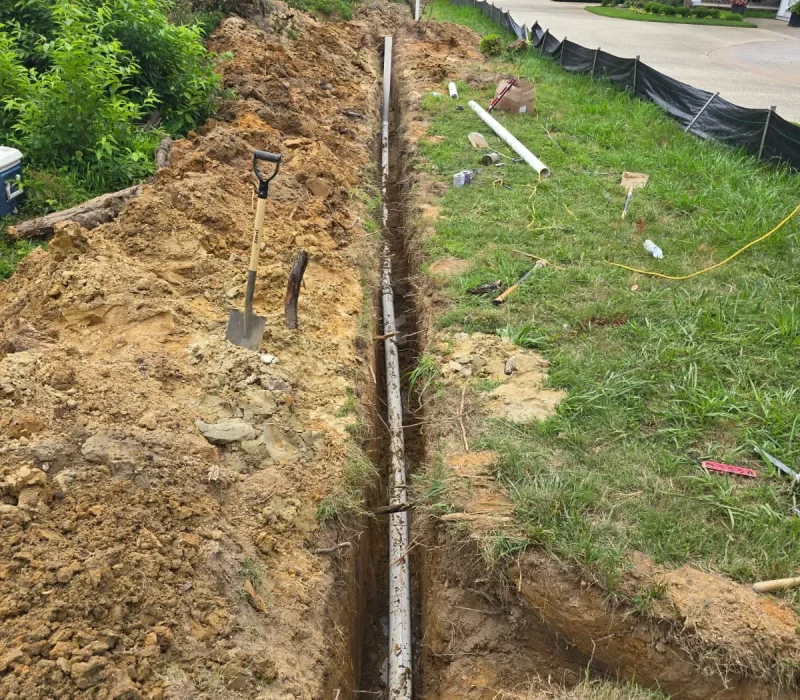
- Keeping the trench as narrow as the work allows. A narrower trench means less soil moved, less damage, and a faster, cleaner restoration
- Protecting tree roots. Roots within a tree’s drip line are essential to its health. Where possible, crews dig carefully around major roots, and the route is adjusted to avoid cutting them
- Controlling sediment and runoff. Silt fencing or similar controls keep loose soil from washing into driveways, storm drains, and neighboring properties, especially important during Richmond’s rainy seasons
- Keeping the site safe. Open trenches are marked or covered when the crew isn’t on site, to protect children, pets, and visitors
What to Expect Day by Day
Every project is different, but most residential excavation follows a predictable pattern.
- Day of arrival: The crew confirms utility markings, sets up site protection, and stages materials. Equipment, from a mini excavator to hand tools depending on the site, arrives
- Excavation: The trench is opened to the required depth and graded. Near utilities and roots, the crew often switches to hand digging
- Pipe installation: New pipe is set on stable bedding at the correct slope and connected
- Testing and inspection: The line is tested, and the local inspector approves the work before anything is covered
- Backfill and compaction: The trench is filled in layers and compacted to prevent the ground from settling later
- Restoration: Topsoil is returned, sod is replaced or the area is prepared for seeding, and debris is cleared away
Smaller repairs may be finished in a day, while longer runs or deeper lines can take several days, especially when weather or inspections affect the schedule.
What Homeowners Can Do to Help
A little preparation on your end can make the process smoother.
- Move vehicles, patio furniture, planters, and play equipment away from the work area
- Tell the crew about irrigation lines, buried wires, or any past work in the yard
- Mark any plants you want to save, or ask whether valuable plants can be temporarily relocated
- Keep children and pets indoors or away from the work area while equipment is operating
- Plan for a short-term disruption to water service if the work involves a water line, and ask your plumber when to expect it
- Ask for a clear explanation of the restoration plan, including whether sod, seed, or other finishing work is part of the job
Caring for Your Yard After the Work Is Done
Newly backfilled soil needs a little attention to settle properly.
- Water new sod or seed regularly according to your plumber’s or landscaper’s guidance, especially during warm weather
- Expect some settling. Even compacted soil can sink slightly after heavy rain. Let your plumber know if you notice a significant dip
- Avoid heavy vehicles or equipment over the trench area until the soil has stabilized
- Hold off on planting large shrubs or trees directly over the new line, so future access is easier and roots don’t interfere with the pipe
Final Thoughts
Underground plumbing work will always involve some digging. But with the right planning, the right crew, and care for your landscaping at every step, the impact on your yard can be kept to a minimum, and the finished result protects your home for decades.
If you’ve been putting off a plumbing repair because you’re worried about your yard, the best first step is simply to ask for an assessment. A licensed plumber can walk the property, explain your options, and give you a clear plan before any digging starts.
Planning underground plumbing work at your Richmond, VA property? Contact Cordova’s Plumbing LLC for a free estimate. We’re licensed, insured, bilingual, and available 24/7 for emergencies throughout Richmond and the surrounding 100-mile area.
Contact us online to schedule your service.