Gas Appliance Installation: What Virginia Homeowners Need to Know Before Getting Started
July 24, 2026
Building a new home is one of the most exciting investments you’ll ever make — but behind every finished bathroom, kitchen, and laundry room is a complex plumbing system that has to be planned, installed, and inspected long before the walls go up or the floors go down. For homeowners and builders in Richmond, VA, understanding what the new construction plumbing process looks like from start to finish can help you avoid delays, costly mistakes, and surprises down the road.
At Cordova’s Plumbing LLC, we have extensive experience handling new construction plumbing projects throughout Richmond, VA and the surrounding area. Here’s a clear, stage-by-stage breakdown of what to expect when plumbing a new build.
Before a single pipe is placed in the ground, a significant amount of planning and coordination has to take place. This phase sets the foundation for everything that follows.
Skipping or rushing this phase is one of the most common causes of costly rework on new construction projects. A detailed plan upfront saves significant time and money later.
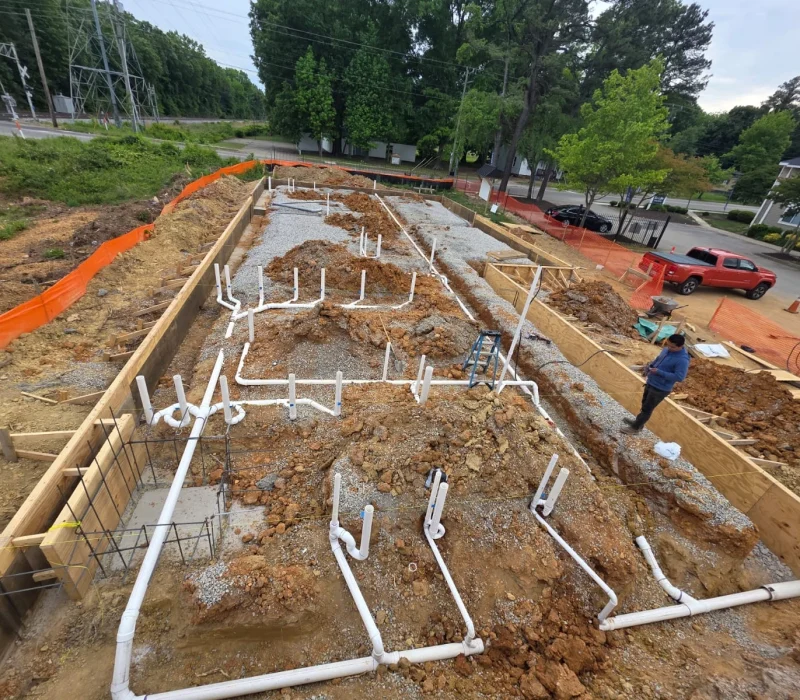
This is one of the most critical stages of new construction plumbing — and the one that’s hardest to fix after the fact. Once concrete is poured, the underground system is locked in place permanently.
Any errors in slope, pipe sizing, or connection placement at this stage are extremely expensive to correct once the slab is down, which is why experienced, licensed plumbers are essential for new builds.
Once the slab is poured and the home’s framing is complete, the above-ground plumbing rough-in begins. This phase installs the supply lines and drain connections that will run through walls, floors, and ceilings.
This is the last opportunity to make adjustments to the plumbing layout before it’s enclosed inside the finished walls, making thorough inspections at this stage especially important.
With the home nearing completion, the final phase of plumbing focuses on connecting fixtures and making everything fully operational.
No new home can be occupied until all plumbing inspections are passed — making this final phase just as important as the groundwork laid at the beginning of the project.
New construction plumbing is a multi-phase process that requires precise planning, skilled installation, and coordination with multiple trades and inspectors. Each stage builds directly on the one before it, and a mistake at any point — particularly underground — can have serious consequences for the finished home.
Whether you’re a homeowner planning a custom build or a contractor looking for a reliable plumbing partner in the Richmond, VA area, working with a licensed and experienced plumber from day one is the single most important step you can take to protect your investment.
Building in Richmond, VA and need a trusted plumbing contractor? The team at Cordova’s Plumbing LLC brings over 10 years of experience to new construction projects of all sizes. We’re licensed, insured, and available to coordinate with your build team from groundbreaking to final inspection.
📞 Call us at (804) 974-5484 or contact us online to schedule an inspection today.
Our team is committed to excellence, honesty, and long-lasting results—providing peace of mind for homeowners and businesses alike.
Our licensed and insured team is dedicated to delivering professional results and 24/7 emergency support when you need it most.
When you choose us, you’re not just hiring a contractor. You’re gaining a trusted partner with over 10 years of experience, licensed and insured service, and a commitment to quality and customer satisfaction.